They called my name while the crowd was already standing, clapping so hard it hurt my ears. The screen behind me displayed photos of my younger face, accompanied by words about loyalty, sacrifice, and legacy.
I stepped onto the stage under white lights that erased every wrinkle and every ache. The CEO hugged me in front of the cameras and thanked me for giving this company my life.
They handed me a glass award and asked me to smile. I did, because smiling had been my job for a long time.
The applause followed me down the steps, warm and loud, like it might carry me somewhere safe. I believed it for a moment.
Before I reached my seat, a woman from HR touched my arm and said my name quietly. She asked if I could spare a minute, just a quick thing, nothing to worry about.
We stepped a few feet away, still in view of the ballroom doors where laughter and music spilled out. She kept her voice calm, almost kind, like she was reading the weather.
She said the company was restructuring and that my role was no longer needed. She thanked me again, using the same words I had just heard on stage.
I nodded and waited for the rest, because silence has always been easier than begging. I did not ask why today of all days.
Another man joined us, someone from security I had nodded to for years. He stood close enough that I felt the message without it being said.
They asked for my badge, the one they had clipped on me minutes earlier for the photos. I handed it over and felt something hollow open in my chest.
My phone buzzed once and went dead. My email signed itself out like I had never existed.
I helped build that place when it was nothing but dust and borrowed tools. I was there before anyone talked about vision or exit strategies.
I worked double shifts because there was no one else to call. I took less pay because they promised more later, and I believed them.
Contracts were always coming next quarter. Loyalty, they said, would be remembered.
I missed dinners and school events, telling my wife it was temporary. My body paid for it slowly, then all at once.
I never asked for credit or applause. I was proud of being dependable and quiet.
Back in the hallway, HR said someone would help me gather my things. She spoke like this was for my comfort.
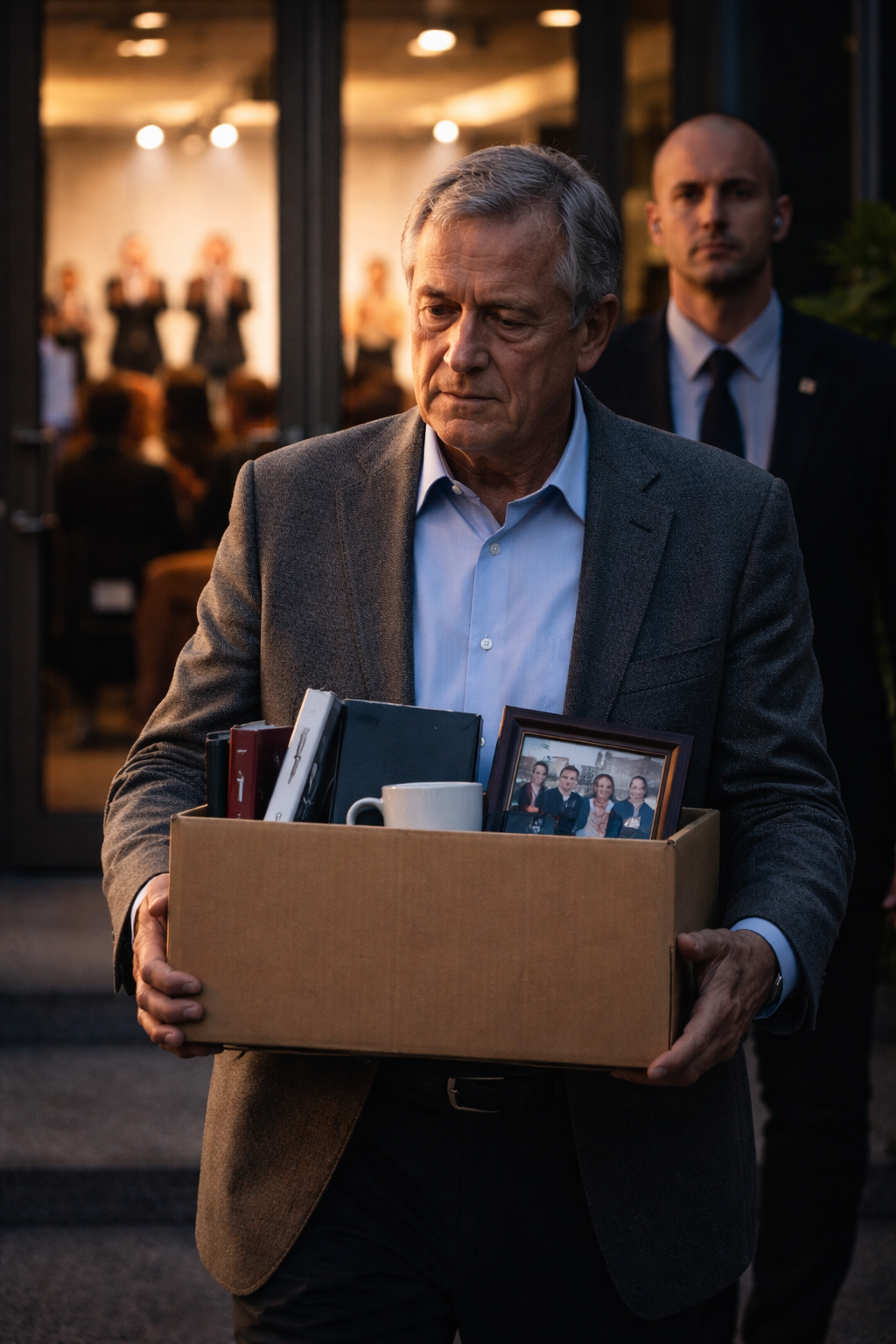
When I reached my desk, a cardboard box was already there. My photos, my mug, and twenty years of notes were stacked neatly inside.
People I trained stared at their screens like they were reading something important. A few looked up and then away, afraid of being seen.
No one said my name. No one said goodbye.
The security man walked behind me, not touching, not rushing. It was worse than being pushed.
The elevator ride felt longer than all my years there. I watched the numbers drop and wondered how it had all disappeared so fast.
Outside, the parking lot was full, and the sun was bright. Inside, they were still celebrating something I was no longer part of.
At home, I set the box on the table and sat down because my legs would not hold me. The house was quiet in a way that felt personal.
I thought about bills, prescriptions, and the mornings I no longer had a reason to wake up early. I did the math and felt afraid for the first time in years.
Days lost their shape after that. Without routine, I felt like I had been erased.
I told people I retired early because it sounded cleaner. The truth felt too small to explain.
One afternoon, I went through old folders in the garage looking for tax papers. I found something else instead.
It was an old agreement from the early days, signed when trust was all we had. A lawyer friend had insisted I keep a copy, just in case.
There was a clause about deferred ownership for founding employees. It was quiet, clear, and dated long before the applause.
I had never mentioned it because I never thought I would need it. I assumed loyalty worked both ways.
An accountant read the papers and nodded slowly. He told me to let him handle the rest.
Weeks later, the company’s lawyers contacted me with careful words and softer voices. They sounded nothing like the people who walked me out.
There were no meetings where I raised my voice. There were no speeches or confrontations.
Everything resolved itself through documents and time. Justice came without noise.
I did not return to the building. I did not ask for apologies or explanations.
I paid what I owed and fixed what was broken at home. I started taking morning walks instead of commuting.
Sometimes I drive past the office and see new faces in the windows. I feel nothing sharp anymore.
They took my badge and my routine, but not my record or my name. Silence gave me back what applause never could.