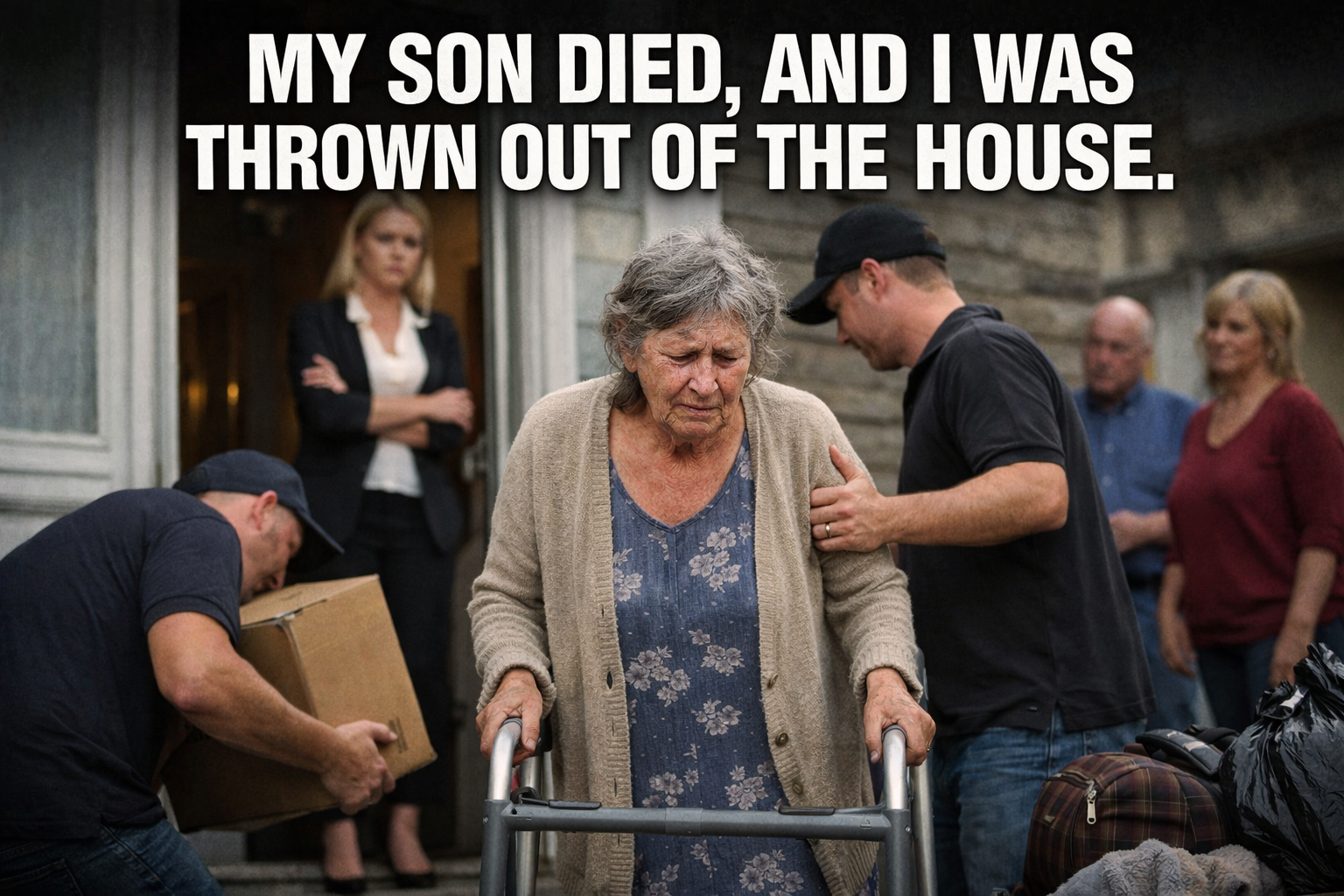
My son was buried on a Tuesday, and by Friday morning, his wife told me the house was no longer mine. She said it calmly, standing in the doorway, holding papers like proof that grief had an expiration date. She asked me to leave before it became awkward for everyone watching.
I was sixty-seven years old, leaning on my walking chair, still wearing black from the funeral. She looked at me the way people look at things they are done using. Then she said she hoped I would “understand the situation.”
The neighbors were outside, close enough to hear everything. One watered plants that did not need water, and another stared at his phone. No one spoke for me, and I did not ask them to.
She said the will was clear and that emotions did not change ownership. She reminded me that she was now responsible for the house and needed space to grieve properly. Then she asked how soon I could be gone.
That house had been my home for almost thirty years. I raised my son there after his father left without a goodbye. Every corner of it carried my voice, my prayers, and my sacrifices.
I worked two jobs to keep that roof over us. I skipped meals so he wouldn’t feel hungry, and I patched clothes instead of buying new ones. When he was sick, I slept sitting up beside his bed because lying down felt like abandoning him.
None of that mattered now. Paper mattered more. Signatures mattered more. I mattered less.
She called a moving service, but not for furniture. One of the men asked where to take me, calling me “the old lady” like I wasn’t standing right there. She answered before I could speak and said there was a small place far from the city.
That was when I realized she had planned this. She wasn’t angry or rushed. She was organized. She had already decided where my life would shrink to.
She was my sister’s daughter. People always said life had strange twists, but this one felt deliberate. Years ago, my sister loved the man I married, and losing him to me had never stopped hurting her.
A neighbor I barely knew helped me into her car. She whispered that this was wrong and squeezed my hand like an apology for the whole world. Then the door closed, and I was driven away from the only life I had known.
They left me in a small, forgotten house my son once owned long before success changed him. The paint peeled, the air was heavy, and the silence felt louder than any argument. When the car drove away, I understood that I had not just lost my son.
I had lost my place in the world.
The days there blurred together. I struggled to stand long enough to cook, and bathing became a careful process of resting between steps. Some mornings I woke up already exhausted, like sleep itself had abandoned me.
I dropped my pills more than once and cried because bending down hurt too much. At night, the cold crept into my bones, and I wrapped myself in the same blanket until it felt like it might tear. I learned how quiet suffering sounds when no one is listening.
I heard things through distant voices. My daughter-in-law hosted dinners and smiled for photos. My sister sat beside her, laughing, wearing clothes bought with a life that had been taken from me.
They traveled and celebrated. I counted pills and measured pain. The contrast was sharp enough to cut.
There were mornings when my legs shook so badly I had to grip the walking chair to stay upright. I spoke to my son out loud in those moments, not to complain, but to remind myself that he had known me. I told him I was still here.
Three weeks passed like that. Then someone knocked on the door.
A man stood there in a dark coat, holding a folder close to his chest. He said my name carefully, as if it carried weight again. He asked if he could come in.
He was a lawyer. He said my son had asked him to find me if I was ever displaced from my home. He said my son had prepared for silence, not fairness.
The documents were dated years before the marriage. Properties placed quietly under my name, accounts meant for care and dignity, not display. Everything was arranged long before anyone thought to look.
There was a home registered across from the one his wife now lived in. Larger, calmer, and waiting. The lawyer said its value was many times more than what she inherited.
My son left a letter. He wrote that love does not need witnesses to be real. He wrote that I would need peace more than applause.
I moved quietly. There were no announcements and no explanations. The staff spoke softly and waited for me to move at my own pace.
From my window, I could see the house I had been thrown out of. Lights were on most nights, and sometimes music drifted across the street. I never waved, and I never needed to.
Time settled into something gentle. Pain did not disappear, but it loosened its grip. For the first time since the funeral, I slept through the night.
Months later, the quiet broke. Police cars lined the street, and voices carried through the air. My sister’s husband had gambled away everything they had.
They lost the house. They lost the comfort. They lost the ground beneath their feet.
One afternoon, they came to my gate. My daughter-in-law no longer looked polished, and my sister looked smaller than I remembered. They asked to talk.
They said family should not turn away from family. They said mistakes happen and people deserve second chances. They asked for help.
I listened without interrupting. I did not remind them of the day I was carried out like an object. I did not explain the nights I spent crying alone.
I simply asked the guard to close the gate.
Not in anger. Not in revenge. Some doors are closed gently because reopening them would cost too much.
That night, I slept without pain. I thought of my son and understood what he had done for me. Silence, it turns out, was how he taught me to stand.