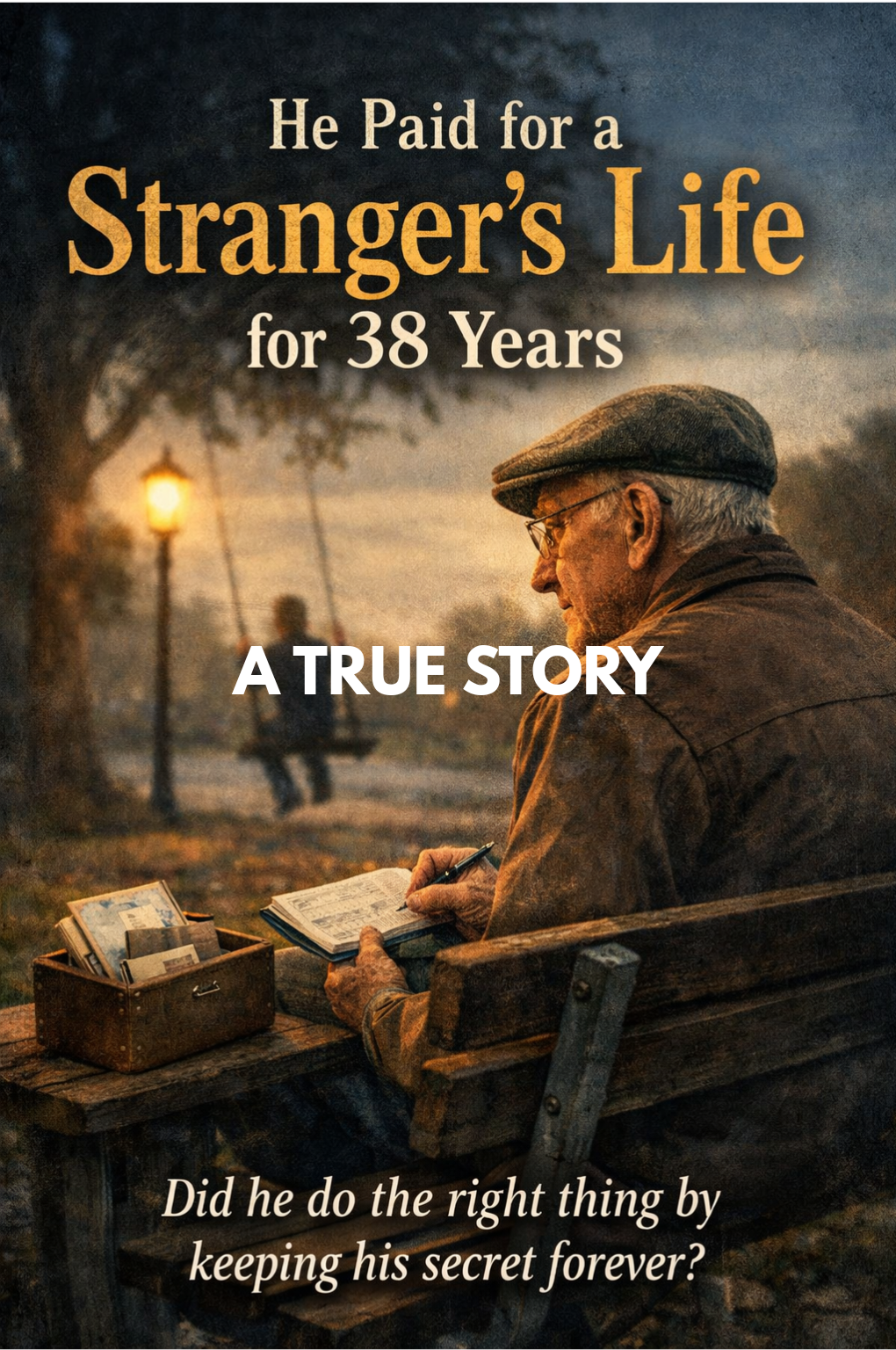
A true story
People thought Harold Bennett was just a quiet old man.
He lived in a narrow brick house on Maple Street, drove a dented gray sedan, and wore the same brown jacket every winter. He waved to his neighbors. He returned library books on time. He never missed a Sunday service.
No one would have guessed that for nearly four decades, Harold had been secretly paying for another man’s life.
Not metaphorically.
Literally.
The first payment
In 1985, Harold was a junior accountant at a manufacturing company in Dayton, Ohio. He was thirty-seven, recently divorced, and trying to rebuild something that felt like it had collapsed quietly while he wasn’t looking.
One rainy Thursday evening, he stopped at a grocery store on his way home.
At the checkout, the young cashier froze when she saw the total.
She whispered, “I’m sorry… I think my card is going to decline.”
Her hands were shaking.
Harold glanced at the screen. It was $26.48.
He didn’t think. He reached into his wallet.
“I’ve got it,” he said.
She tried to refuse.
He smiled and shook his head.
“It’s just groceries,” he said.
She cried anyway.
Her name was Linda.
That should have been the end of it.
It wasn’t.
The second payment
Two weeks later, Harold saw Linda again.
This time, she wasn’t behind the register.
She was sitting on the curb outside the store, holding her face in her hands.
Her little boy sat beside her, quiet and too thin for his age.
Harold hesitated.
Then he sat down.
She told him everything.
Her husband had died the year before. Her son, Michael, had been born with a heart condition. The surgeries were endless. The bills were impossible. She worked two jobs. It was never enough.
Harold listened.
Then he asked one strange question.
“How much do you need each month to stop drowning?”
She stared at him.
“I don’t want charity,” she said.
“This isn’t charity,” Harold replied. “This is help. There’s a difference.”
She told him the number.
It was $312.
Harold nodded.
“I can do that,” he said.
And he did.
The years that followed
Every month, Harold sent a check.
No card.
No note.
Just a check.
Linda never asked for more.
Harold never offered less.
Michael grew up.
He survived.
He learned to walk, then run, then argue, then apologize, then dream.
Harold never met him again.
He didn’t want to.
He told himself it was better that way.
Because then it stayed simple.
The cost
Harold never remarried.
He never traveled.
He lived modestly.
He fixed things instead of replacing them.
He drove that dented car until it was practically a family member.
He did not consider himself generous.
He considered himself responsible.
Because he knew something Linda did not.
He had made a mistake once.
Years before he met Linda, Harold had been the accountant who misfiled a form.
A small error.
A decimal in the wrong place.
The company corrected it.
But the damage had already been done.
A man had been laid off because of it.
Linda’s husband.
He had fallen into debt.
Then into despair.
Then into the river.
Harold never told anyone.
He just paid.
For thirty-eight years.
The final payment
When Harold was seventy-five, he was diagnosed with cancer.
He sold his car.
He moved into a small apartment.
He kept paying.
Then one month, he didn’t.
Linda panicked.
She tracked him down.
She stood in his doorway crying.
“You don’t owe us anything,” she said.
He smiled.
“I know.”
They sat together.
For the first time.
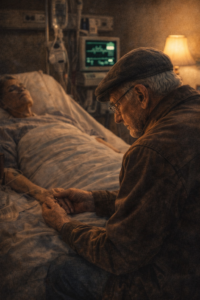
She thanked him.
He asked about Michael.
She said he was a teacher now.
Harold closed his eyes.
“That’s good,” he said.
And he was gone two weeks later.
What was found
After Harold’s death, his niece found a box.
Inside were copies of checks.
Dates.
Amounts.
Thirty-eight years.
She contacted Linda.
Linda contacted Michael.
Michael cried.
He said, “I owe my life to a man I never met.”
Linda said, “He didn’t want thanks.”
So they planted a tree.
On Maple Street.
With a small plaque.
It reads:
“For Harold — who quietly carried what was not his to carry.”
Why do people still talk about him
Because most heroes are loud.
But the ones who matter most are quiet.
And because sometimes, the greatest love is not romance.
It is a responsibility.
Do you think Harold did the right thing by carrying this secret alone for his whole life, or should he have told the truth even if it caused more pain?
Written by KR Raja