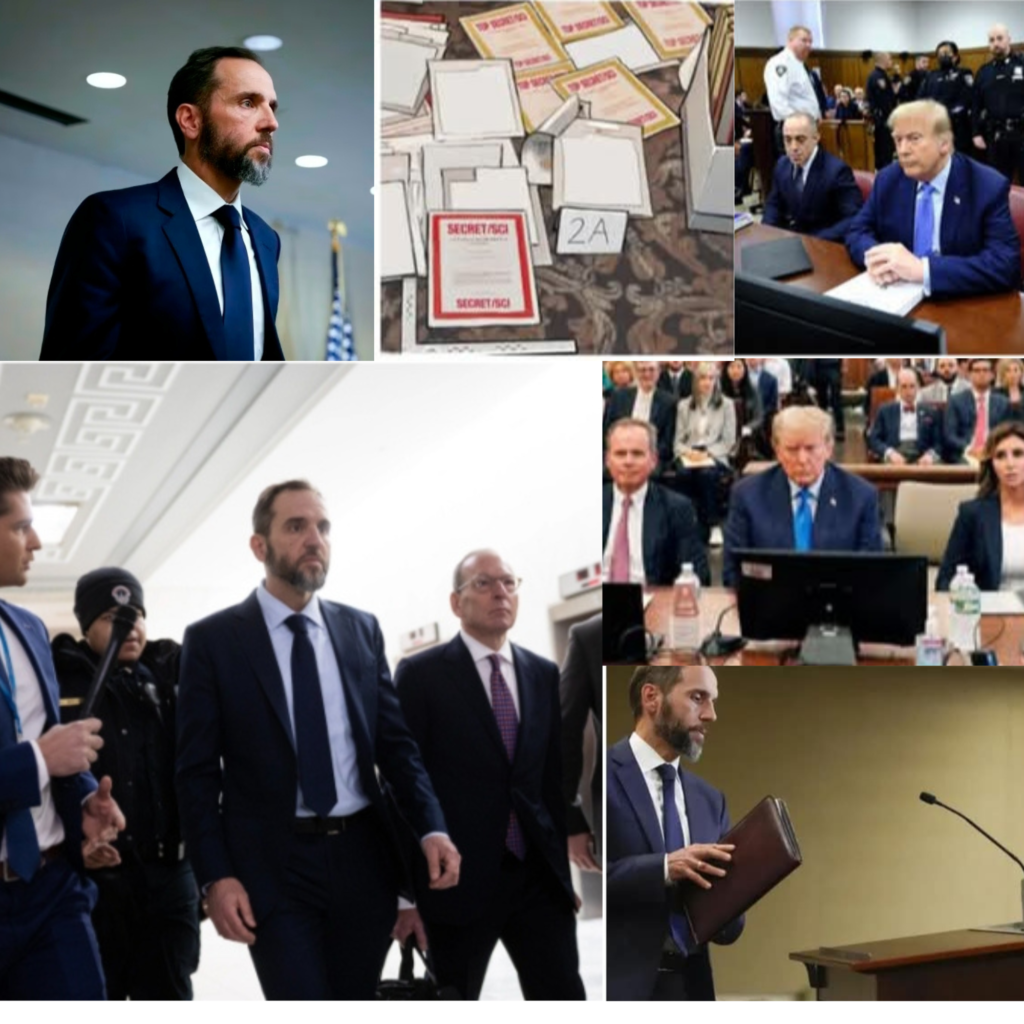
A rare and closely watched moment unfolded in Washington as Special Counsel Jack Smith appeared before the Republican-led House Judiciary Committee, offering a detailed defense of his investigation into former president Donald Trump. The hearing quickly drew national attention, not for partisan clashes alone, but for Smith’s firm explanation of how and why his office pursued criminal charges related to the 2020 presidential election.
In his opening remarks, Smith rejected claims that the investigation was politically motivated. He told lawmakers that the case was built through standard legal procedures, guided by evidence gathered over months, and reviewed by multiple grand juries. According to Smith, the decision to bring charges rested solely with his office and was based on conduct he believes violated federal law.
Smith emphasized that prosecutors are obligated to follow the facts wherever they lead, regardless of a suspect’s political influence or public profile. He stated that the investigation examined efforts surrounding the 2020 election and the transition of power, and that charging decisions were made only after applying the same legal standards used in any federal case. He also made clear that political considerations played no role in the process.
As questioning continued, committee members pressed Smith on issues of accountability, prosecutorial discretion, and public trust in the justice system. Smith responded by underscoring the independence of the Justice Department and the role of courts—not politicians—in determining guilt or innocence. He noted that indictments are allegations, not verdicts, and that defendants are entitled to contest the charges through the legal process.
Observers noted a tense atmosphere in the hearing room, with sharp exchanges reflecting the broader national debate over the investigation. Outside the chamber, legal analysts suggested that Smith’s testimony was aimed at reinforcing public understanding of how the case was constructed, rather than litigating the merits of the charges in a political setting.
The appearance added another chapter to a legal saga that continues to shape the political landscape. While supporters and critics interpreted the testimony through very different lenses, the hearing reinforced a central reality: the outcome of the case will ultimately be decided in court, not in Congress or on television. For now, Smith’s remarks placed the investigative record squarely on the public stage, leaving the next steps to the judicial process.